
ESA Selects Warsaw for New Civil Security and Resilience Centre to Strengthen Europe's Space Capabilities
The European Space Agency (ESA) and the Republic of Poland have announced plans to establish a new ESA Centre for Civil Security and Resilience in Warsaw, marking a significant milestone in Europe's efforts to strengthen its space-enabled security infrastructure and resilience against emerging threats.
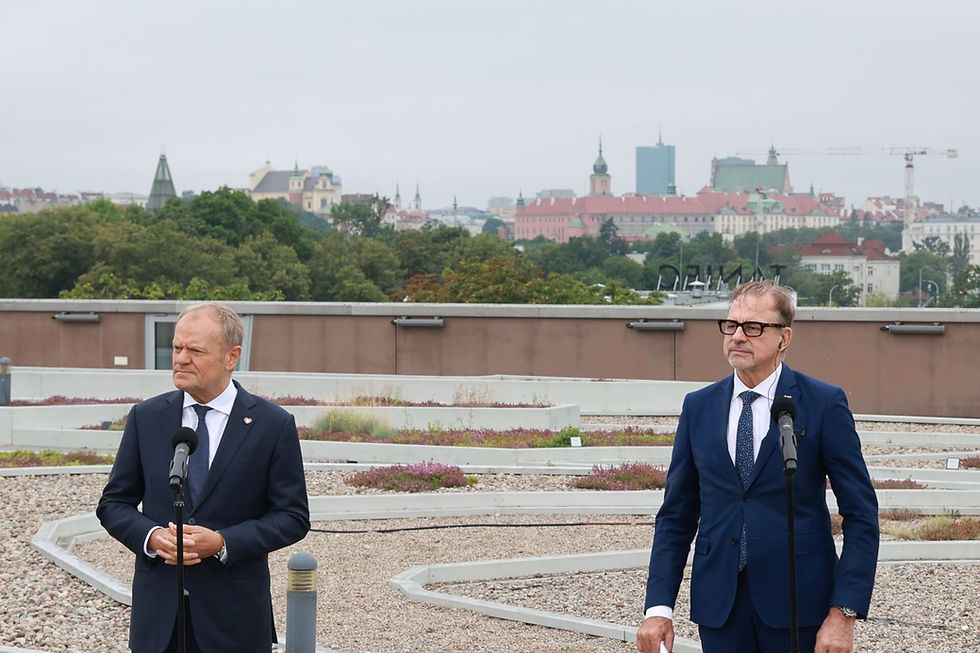
The announcement was made during a joint press conference in Warsaw on July 13, where ESA Director General Josef Aschbacher joined Polish Prime Minister Donald Tusk and Minister of Finance and Economy Andrzej Domański to unveil the initiative.
The new center will play a strategic role in advancing ESA's expanding security and resilience programs while supporting the coordinated development of European capabilities in areas critical to civil protection, crisis response, and strategic autonomy.
Strengthening Europe's Security Through Space
The Warsaw-based facility will complement ESA's existing network of establishments and specialized centers across Europe, including the European Space Security and Education Centre (ESEC) in Belgium. Rather than operating independently, the new center will become part of a broader European framework designed to improve collaboration, accelerate innovation, and address increasingly complex security challenges facing the continent.
As Europe places greater emphasis on resilience, secure communications, Earth observation, and rapid decision-making during crises, the new center is expected to become an important pillar supporting these priorities.
ESA Director General Josef Aschbacher emphasized that the initiative represents both a new chapter for ESA and recognition of Poland's rapidly growing influence within Europe's space ecosystem.
He noted that as Europe strengthens its resilience in an increasingly challenging geopolitical environment, the center will help develop the capabilities needed to protect European interests, support citizens, and enhance collective preparedness while building upon Poland's expanding expertise in space technologies.
A Major Vote of Confidence in Poland's Space Sector
For Poland, the decision reinforces the country's growing importance within the European space industry.
Minister Andrzej Domański described the selection of Warsaw as a strong expression of confidence in Poland's institutions, businesses, and scientific community, highlighting the country's exceptional potential to accelerate the development of advanced space technologies.
Since joining ESA in 2012, Poland has steadily expanded both its industrial capabilities and participation in ESA programs. The country further strengthened its commitment during ESA's Council at Ministerial Level (CM25) in Bremen in November 2025 by significantly increasing its program subscriptions and supporting the European Resilience from Space (ERS) initiative.
ERS is designed to improve Europe's resilience by enabling faster access to trusted satellite data, secure communications, and more effective decision-making during emergencies and crises.
From Strategic Vision to Operational Reality
The announcement builds upon the Letter of Intent signed between ESA and the Republic of Poland during CM25, which initiated the process of establishing the new center.
Following that agreement, ESA and Poland formed a joint task force to define the center's objectives, operational scope, and implementation framework.
The two partners will continue working over the coming months to finalize the legal and operational arrangements required before the facility officially becomes operational.
Pre-operational activities are expected to begin in 2027, allowing the center to gradually expand its capabilities before reaching full operational status.
A Strategic Investment in Europe's Future
As Europe's dependence on space-based infrastructure continues to grow, investments in resilience, secure communications, and civil security are becoming increasingly important.
The establishment of ESA's new Civil Security and Resilience Centre in Warsaw reflects a broader European strategy to strengthen cooperation among governments, industry, and research institutions while ensuring that space technologies remain at the heart of crisis response, infrastructure protection, and long-term strategic resilience.
With Poland emerging as one of Europe's fastest-growing space nations, the new center is expected to become an important hub for innovation, collaboration, and capability development in the years ahead.


Comments