
Amazon Leo Files FCC Application for 5105 Direct-to-Device (D2D) Satellite Constellation

Amazon is significantly expanding its ambitions in the satellite communications market with plans to deploy a dedicated Direct-to-Device (D2D) satellite constellation capable of connecting everyday smartphones directly from space.
The company has submitted an application to the U.S. Federal Communications Commission (FCC) seeking approval to launch and operate up to 5,105 Low Earth Orbit (LEO) satellites, creating one of the world's largest satellite-based mobile connectivity networks. If approved, deployment is expected to begin in 2028, positioning Amazon Leo as a major competitor in the rapidly evolving direct-to-smartphone satellite communications sector.
Expanding Connectivity Beyond Cell Towers
Unlike traditional satellite broadband systems that require dedicated user terminals, Amazon Leo's D2D network is designed to communicate directly with compatible smartphones, wearables, and other mobile devices equipped with satellite-enabled chipsets.
The system will provide:
Voice calling
SMS and messaging
Mobile broadband data
Emergency communications
IoT connectivity
Disaster response services
By partnering with mobile network operators worldwide, Amazon intends to extend existing terrestrial cellular networks into regions where conventional infrastructure is unavailable, economically impractical, or vulnerable to natural disasters and other disruptions.
The initiative addresses one of the telecommunications industry's largest remaining challenges, connecting billions of people who still experience unreliable or nonexistent mobile coverage.
Built on the Globalstar Acquisition
The FCC filing follows Amazon's previously announced agreement to acquire Globalstar's satellite operations, infrastructure, and globally authorized Mobile Satellite Service (MSS) spectrum licenses.
Rather than replacing Amazon Leo's broadband constellation, the new D2D network will complement its existing first- and second-generation broadband systems while integrating with Globalstar's HIBLEO and C-3 constellations.
The combination provides Amazon with valuable licensed spectrum resources, enabling it to accelerate its entry into the growing satellite-to-smartphone market.
A Five-Layer Orbital Architecture
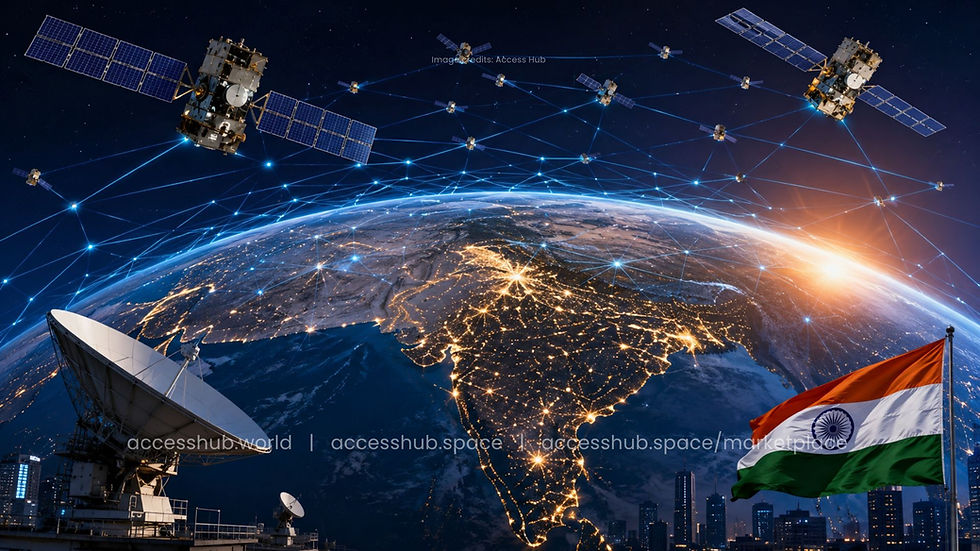
To maximize worldwide coverage, Amazon plans to distribute the satellites across five orbital shells, each optimized for different geographic regions.
Three mid-latitude orbital layers will serve the world's most densely populated regions, while two higher-inclination shells will extend connectivity into northern and southern high-latitude areas, including near-polar regions.
The constellation will operate in L-band and S-band frequencies for communications with mobile devices, while using Ka-band and V-band spectrum for high-capacity backhaul links between satellites and Amazon's ground infrastructure.
This architecture enables the network to efficiently move traffic between users and the broader internet while maintaining global coverage.
Intelligent Satellites Instead of Simple Relays
A defining feature of Amazon Leo's D2D system is its use of onboard digital signal processing, allowing satellites to process communications in orbit instead of simply relaying signals to ground stations.
This approach is enhanced by optical inter-satellite links, enabling laser communications between spacecraft that intelligently route traffic across the constellation before forwarding it to ground gateways.
Amazon also plans to employ several advanced technologies to improve network performance, including:
Digital beamforming
Beam hopping
Dual-polarization reception
Adaptive modulation and coding
Tight adjacent-channel spectrum management
Together, these capabilities are designed to improve spectrum efficiency, increase network capacity, reduce interference with other satellite operators, and maintain reliable communications even under challenging signal conditions.
Designed for Critical Communications
Beyond consumer connectivity, Amazon sees significant opportunities across enterprise and government markets.
Potential applications include:
Emergency communications during natural disasters
Remote industrial operations
Fleet management
Supply chain monitoring
Critical infrastructure connectivity
Remote IoT sensor networks
Humanitarian response missions
Because the service works alongside existing mobile operators rather than replacing them, it can provide seamless coverage in locations where terrestrial networks cannot economically expand.
Strategic Partnerships Strengthen the Ecosystem
Amazon has already established partnerships with several telecommunications providers, including Vodafone, DirecTV, Herotel, and Australia's National Broadband Network (NBN), with additional mobile operator collaborations expected as deployment progresses.
The company has also announced cooperation with Apple, enabling satellite connectivity for supported iPhone and Apple Watch devices, including services such as Emergency SOS via satellite, Messages, Find My, and Roadside Assistance, while jointly exploring future satellite-enabled capabilities.
These partnerships illustrate Amazon's strategy of integrating satellite connectivity directly into existing consumer ecosystems rather than building an entirely separate communications platform.
Competition Intensifies in the Direct-to-Device Market
Direct-to-device satellite communications have rapidly emerged as one of the fastest-growing segments within the commercial space industry. As satellite operators increasingly compete to extend mobile coverage beyond terrestrial networks, Amazon's latest filing signals its intention to become a major player in this strategically important market.
With more than 390 first-generation broadband satellites already in orbit, Amazon Leo continues deploying its broader satellite internet constellation while preparing for the next phase of its expansion.
If regulatory approvals proceed as planned, the new D2D constellation could reshape how mobile connectivity is delivered globally, bringing always-available communications to remote communities, transportation networks, emergency responders, governments, enterprises, and everyday smartphone users, regardless of their distance from the nearest cell tower.


Comments