
Deepinder Goyal Exits Pixxel Funding Round as GIC Strengthens Its Bet on Indian SpaceTech
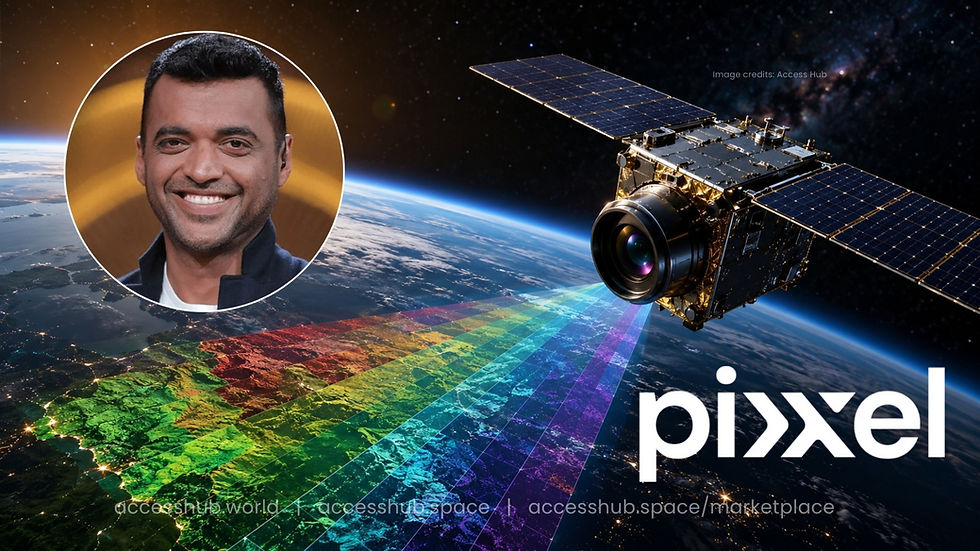
India’s commercial space sector is entering a new stage of maturity, where long-term institutional capital is beginning to play a bigger role than celebrity-led startup investing.
According to reporting by Moneycontrol, Bengaluru-based space-tech company Pixxel is moving ahead with an expanded funding round that could reach between $80 million and $100 million, despite entrepreneur Deepinder Goyal choosing not to participate in the investment discussions.
Instead, existing backer GIC is expected to increase its exposure to the company, reinforcing a broader trend of institutional investors deepening their involvement in India’s high-growth deep-tech and space infrastructure sectors.
The development is significant not because an investor stepped away, but because the round itself continues to grow.
Earlier reports had indicated that Goyal was exploring a sizeable personal investment into Pixxel as part of the company’s latest fundraising efforts. However, as first reported by Moneycontrol, the entrepreneur ultimately decided not to move forward with the deal. Even so, investor appetite around Pixxel appears to remain strong, with discussions continuing around an upsized round.
That momentum reflects the increasing strategic relevance of Earth observation and satellite intelligence technologies globally. Investors today are not only evaluating space startups through the lens of innovation, but also through their long-term importance for climate monitoring, national security, infrastructure intelligence, supply chains, agriculture, and AI-enabled analytics.
Founded by Awais Ahmed and Kshitij Khandelwal, Pixxel has positioned itself as one of India’s most prominent Earth observation companies. The startup is building a constellation of hyperspectral imaging satellites designed to capture highly granular Earth data that can be used across industries ranging from energy and mining to environmental monitoring and defense intelligence.
Unlike traditional imaging satellites, hyperspectral systems analyze information across a much broader electromagnetic spectrum, allowing users to detect material composition, environmental changes, pollution signatures, crop stress, and other patterns that conventional imagery often misses.
Over the past few years, Pixxel has steadily strengthened its credibility among global investors and strategic stakeholders. The company has previously attracted backing from firms including Google, Lightspeed, Blume Ventures, and Glade Brook Capital Partners. Earlier fundraising rounds had already pushed the company close to the $100 million mark in cumulative capital raised.
Pixxel’s growing strategic relevance also comes at a time when India is actively accelerating private-sector participation in space activities.
Earlier this year, the company agreed with IN-SPACe as part of a consortium tasked with developing India’s first privately managed national Earth observation satellite constellation under a public-private partnership framework.
The company is also exploring the convergence of orbital infrastructure and artificial intelligence. Reports indicate Pixxel is working alongside Sarvam AI on an initiative involving AI processing capabilities in orbit, a direction increasingly viewed as strategically important as governments and enterprises seek faster, sovereign, and more secure data-processing architectures.
The broader takeaway from the latest funding developments is clear: India’s space-tech ecosystem is no longer being viewed as speculative or experimental.
Global investors are increasingly treating space companies as long-term infrastructure plays capable of shaping future economic, environmental, and geopolitical capabilities. In that context, Pixxel’s ability to attract continued institutional support, even after a high-profile investor exit, may ultimately say more about the strength of the sector than the withdrawal itself.


88vbet mình thấy được nhắc hoài nên cũng bấm vào xem thử cho biết, kiểu lướt nhanh chứ không ngồi đọc kỹ. Giao diện nhìn khá thoáng, chữ không bị dồn và mấy phần nội dung được chia khối rõ ràng nên kéo xuống không bị rối mắt. Mình có để ý đoạn giới thiệu thương hiệu họ ghi luôn mốc thành lập năm 2016 ở Philippines, đọc cái là hiểu họ muốn nói về nguồn gốc từ đâu. Ngoài ra có chỗ họ để số liệu hoạt động theo dạng khung bảng nên nhìn gọn, không phải mò trong một đống chữ dài. Nói chung cảm giác site làm “sạch” và dễ theo dõi, nhất là mấy box thống…
https://socolivej.tv/ mình vừa lướt qua một lúc để xem họ bố trí trang kiểu gì. Nói thật ban đầu cũng hơi nghi ngại vì mấy site xem trực tuyến hay rối, nhưng trang này trình bày khá thẳng tay: kéo xuống là các khối nội dung hiện ra rõ ràng, chữ với icon để vừa mắt nên mình không phải căng mắt tìm điểm bấm, nhìn lướt vẫn nắm được chỗ nào là phần mình cần. Mình cũng để ý cái menu nằm ở vị trí dễ thấy, chuyển qua lại giữa các mục khá mượt, không bị kiểu phải quay lại đầu trang mới tìm được điều hướng, và cách căn lề/giãn dòng trong mấy bảng thông tin nhìn…
https://tg88.nyc/ đọc mấy bài nói về link trang chủ cập nhật kiểu “mới nhất 2026” nên mình cũng ghé thử cho biết, tưởng sẽ lằng nhằng như nhiều trang cùng chủ đề mà hóa ra mở ra lại thấy khá gọn, kiểu kéo xuống là nắm được họ đang nói gì mà không phải chạy vòng vòng. Mình thích nhất cái đoạn họ để một bảng tóm tắt thông tin về thương hiệu/pháp lý/giao dịch ngay trên trang, nhìn cái là hiểu hướng họ muốn người xem chú ý. Chữ nghĩa chia thành các khối rõ ràng. Tiêu đề đặt dễ theo dõi. Menu cũng nằm chỗ quen mắt nên nhảy qua lại không mất công. Nói chung lướt nhanh…
kuwin mình vừa mở trên laptop để xem bố cục thôi. Nhìn qua là hiểu luồng thông tin họ đặt thế nào, kiểu trình bày khá thẳng và dễ định vị, không phải đảo mắt tìm từng chỗ, với cái menu nằm ngay vùng dễ thấy nên chuyển mục qua lại cũng lẹ. Mình chỉ lướt nhẹ chứ không đọc kỹ nội dung. Mấy khối thông tin chia thành các ô rõ ràng, kéo xuống vẫn giữ nhịp mắt ổn, không bị chữ dồn sát nhau. Có vài bảng số liệu họ căn theo cột nhìn gọn, khoảng cách chữ vừa phải nên xem trên màn hình nhỏ cũng đỡ mỏi. Nói chung mình thích kiểu sắp xếp này vì…
tải go88 mình chỉ dùng để xem giao diện họ trình bày thông tin ra sao. Lướt qua vài phút là thấy họ ưu tiên phần “Giải Đáp Thắc Mắc” cho người mới, kiểu format hỏi–đáp nên đọc nhanh, không phải mò trong bài dài mới ra ý chính, nhìn cái là biết họ đang trả lời câu gì. Mình cũng có để mắt tới đoạn nói về đại lý và hoa hồng, ghi thẳng mức dao động 5% đến 20% nên dễ hiểu cơ chế, ít bị cảm giác nói vòng vo hay giấu số. Tốc độ tải trang ổn, cuộn xuống vẫn mượt, chữ dễ đọc và các khối nội dung tách bạch nên mắt không bị loạn.…