
OPINION | Sudan’s War and the Price of Global Inaction
by Prathik Jayaprakash
The conflict in Sudan, involving the Sudanese Armed Forces (SAF) and the Rapid Support Forces (RSF), has turned into one of the worst humanitarian and political crises in the world. What started as a military power struggle has led to the breakup of the state, mass displacement, and widespread famine, impacting millions of Sudanese. Beyond its borders, the crisis threatens regional stability, with implications for neighboring countries through the risk of refugee flows, cross-border conflicts, and destabilization that could alter the political and economic landscape of the Horn of Africa.
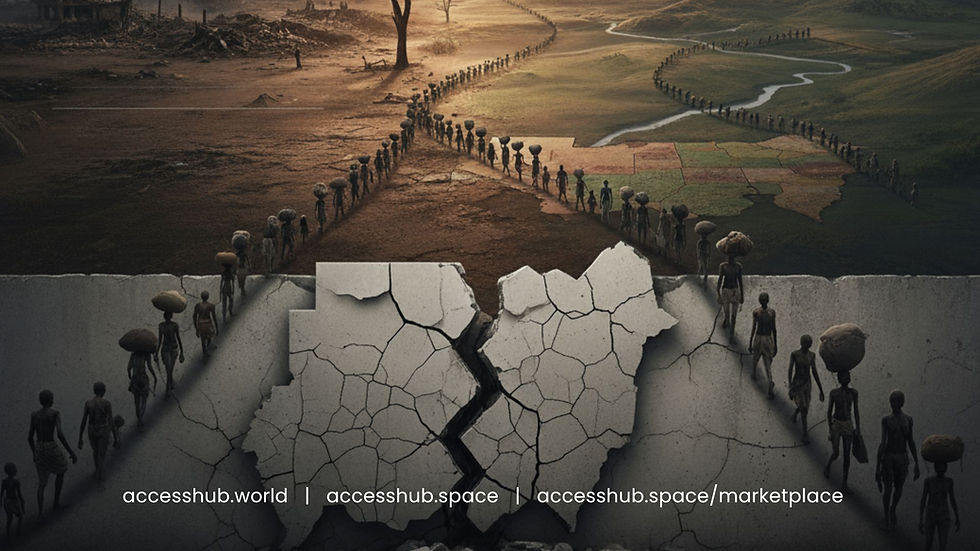
Sudan’s Descent into War
The armed confrontation that erupted in April 2023 between SAF and the RSF reflected both immediate personal rivalries among military leaders and deeper structural issues within Sudan’s political economy. What made the 2023 eruption particularly destructive was that both sides commanded extensive resources, patronage networks, and combat experience; the RSF itself emerged from the Janjaweed militias that played a decisive and brutal role in Darfur a decade earlier. The concentration of armed power among competing military elites meant that contests over state authority quickly translated into widespread violence and city sieges rather than controlled, limited clashes.
In the years before 2023, Sudan experienced a partial transition away from decades of authoritarian military rule, creating an expectation domestically and internationally that a political settlement could deliver civilian-led governance. Those hopes were fragile, however: the military retained decisive power, and competing security actors continued to operate with autonomy. When the SAF–RSF schism widened into open war, the preconditions for democratic consolidation collapsed, and the state apparatus fractured along territorial and sectional lines.
Humanitarian Toll and Civilian Suffering
According to a report from the UN Human Rights Office, at least 3,384 civilians were documented killed between January and June 2025, mostly in Darfur, as conflict and violence have continued to cause widespread suffering and displacement across Sudan. Humanitarian access has been inconsistent and dangerously politicized, compounding the risks of famine, disease outbreaks, and protracted displacement for millions.
These figures are not abstract: they reflect families who have fled on foot for days, crowded makeshift settlements, and a collapse of health and education services across broad swathes of the country. Large numbers of children are out of school, and aid operations struggle to keep pace with both need and insecurity on the ground.
A key pattern in the war is the targeting of civilians and their infrastructure. Human-rights groups and UN agencies have reported attacks on hospitals, markets, and camps, as well as mass graves and cases of forced displacement linked to ethnic violence, especially in Darfur. The RSF’s roots in paramilitaries and its place in local economies have blurred the lines between fighters and civilians. This has enabled looting, predation, and targeted abuses, which fuel local anger and make reconciliation difficult.
Neither side has been credibly held to account for violations, and both groups use their own narratives of victimhood and security to justify force. Until there are independent investigations and real accountability, cycles of revenge and violence will likely continue, harming the chance for a political settlement.
Regional and International Dimensions
Sudan’s conflict is not contained within its borders. The humanitarian crisis has spilled into neighbouring states, straining refugee-hosting capacities and creating cross-border security risks that could redraw regional alignments. Control over strategic resources, territorial gateways, trade routes, and oil-producing regions adds an economic dimension to the conflict that external actors cannot ignore; competition over these assets fuels localized competition and invites opportunistic interventions by regional powers.
International responses have been uneven. Diplomatic efforts and ceasefire proposals have periodically surfaced, and there have been externally mediated truce plans that some actors have temporarily endorsed. However, to foster more effective interventions, international actors could consider implementing targeted sanctions on leaders of both SAF and RSF to pressure them towards dialogue. Establishing a unified mediation format, perhaps under the auspices of a multilateral organization like the African Union or United Nations, could provide a structured approach to negotiations. Additionally, incentivizing compliance with peace agreements through conditional economic assistance packages might help shift incentives for both SAF and RSF. Without such a unified international strategy that aligns humanitarian imperatives with political leverage, efforts will remain fragmented. Short-term pauses in violence, while necessary, have not translated into durable mechanisms for demobilization, vetting of forces, or transitional governance arrangements.
Three factors make a negotiated settlement hard. First, the military and paramilitary fear that losing means not just loss of power, but also possible prosecution and the end of their networks. Second, civilian and civil society actors are fragmented by years of repression and co-optation. This weakens their leverage, even though they are seen as legitimate in many cities. Third, regional powers such as Egypt, Saudi Arabia, and the United Arab Emirates have different goals in Sudan, which weakens international pressure and allows some to undermine diplomacy. Egypt is primarily concerned with border security and maintaining influence in the region. Saudi Arabia and the United Arab Emirates are interested in political stability and potential economic investments. Meanwhile, powers like Ethiopia are wary of the impact on regional dynamics and resource access. These differing interests create a complex diplomatic landscape that complicates efforts to reach a political settlement.
Pathways to Peace and Accountability
Meaningful settlement requires protection of civilians and humanitarian corridors, credible security guarantees and disarmament mechanisms for irregular forces, and a transitional political architecture that enables credible civilian participation while addressing legal and economic concerns. In the absence of such sequencing, ceasefires are likely to be tactical pauses rather than steps toward durable peace.
First, international actors must prioritize unfettered humanitarian access and support scaled-up funding to avoid a worsening of famine and infectious disease risks; operational humanitarian commitments must be insulated from political bargaining as far as practicable. In operational terms, agencies such as the United Nations Office for the Coordination of Humanitarian Affairs (OCHA) and the World Food Programme (WFP) could lead these efforts, coordinating international relief efforts and ensuring that aid reaches the most affected areas. Second, there is a need for robust accountability mechanisms, through international investigations and strengthened support for local documentation efforts, to signal that egregious violations will not be forgotten.
The International Criminal Court and regional human rights organizations could be tasked with initiating investigations and working with local bodies to document violations, ensuring transparency and accountability. Third, diplomatic engagement should pivot from episodic ceasefires to a sustained mediation framework that aligns incentive structures, links security-sector reform to protection guarantees, and offers tangible reconstruction and development packages that make peace politically attractive rather than merely desirable. Organizations such as the African Union and the United Nations could spearhead these diplomatic initiatives, establishing a structured mediation framework and offering economic support to incentivize compliance with agreements.
Finally, reporting and policy work must avoid simplifying narratives. The crisis is not a natural calamity; it is the product of contingent political choices, militarized institutions, and unstable regional dynamics. Accurate diagnosis matters because it shapes whether international engagement mitigates suffering or inadvertently prolongs it. To anchor this analysis within established frameworks, applying concepts from conflict transformation and peacebuilding can enhance our understanding and response. These frameworks emphasize the importance of addressing the underlying causes of conflict, fostering sustainable peace through inclusive dialogues, and rebuilding trust among communities.
Sudan as a Test of International Resolve
Sudan’s present condition is a test of international and regional capacity to manage complex, multi-dimensional conflicts. The cost of failure will be measured not only in the number of deaths, displacements, and disrupted livelihoods, but in the long-term fragmentation of a country that once seemed on the cusp of political renewal. To move beyond the current impasse will require a realistic, sequenced politics of settlement: one that protects civilians now, constrains predatory armed power, and creates credible pathways for inclusive governance. Without that, the war’s destructive logic will continue to expand the humanitarian and political bill that the Sudanese people, and their neighbours, will be forced to pay.
About Author
Prathik Jayaprakash is a journalist and researcher at Access Hub’s News and Editorials Division. His research areas include global affairs with a focus on historical context and theoretical analysis. E-mail: prathikjayaprakash@hotmail.com


Comments